

Watch the Video Here or continue reading below!
How to move your horse’s hind end from the ground and build a practical foundation for control
Being able to disengage your horse’s hindquarters is an important groundwork skill.
It teaches your horse to move the hind end away from pressure while keeping the head directed toward you. This can help improve responsiveness, prepare your horse for more advanced pivots, and give you another way to redirect the body when your horse becomes distracted or resistant.
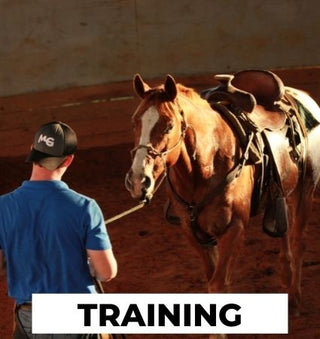
In this eighth-grade Horse Help lesson, Michael Gascon demonstrates the beginning of hindquarter control with Breeze, a 13-year-old Spotted Saddle Horse on his first day of training.
The goal is not to create a perfect pivot immediately.
The first goal is much simpler:
Ask the horse to move the hindquarters, and release the pressure the moment they try.
What Does It Mean to Disengage the Hindquarters?
“Disengage” is simply a technical way to say, “Move your hind end”
Disengaging the hindquarters means asking the horse to move the hind legs around the front end.
The horse’s head remains slightly tipped toward the handler while the hindquarters step away. As the movement becomes more refined, the inside hind leg may cross in front of the outside hind leg.
This exercise is also known as:
- A hindquarter yield
- Moving the hindquarters
- Disengaging the hind end
- A turn on the forehand
- The beginning of a pivot on the front end
The terminology can sound complicated, but the basic request is clear.
You are asking the horse to keep the front end relatively controlled while moving the hindquarters away from your pressure.
Why Hindquarter Control Matters
When you can direct the hind end, you can influence the horse’s entire body
A horse’s hindquarters provide much of their power.
The hind end drives forward movement and contributes to behaviors such as rushing, bucking, rearing, backing quickly, or turning away from the handler.
Teaching a horse to move the hindquarters from a clear cue gives you more influence over that power.
This does not guarantee that a horse will never react, buck, rear, or pull away. However, a responsive hindquarter yield can give you a practical way to redirect the horse’s body and interrupt a straight, powerful movement.
It can also help with:
- Improving groundwork control
- Preparing for one-rein exercises
- Directing the body around obstacles
- Teaching lateral responsiveness
- Developing future pivots
- Improving control under saddle
- Regaining the horse’s attention
- Preparing for safer handling
The exercise becomes especially valuable when the horse learns to respond softly instead of requiring a large amount of physical pressure.
Control the Head Before Moving the Hindquarters
Head control gives you a clearer way to direct the rest of the horse
Before asking for the hindquarters, make sure you can guide your horse’s head.
The Horse Help principle is:
Control the head, control the horse.
When the horse’s nose is tipped slightly toward you, the body is shaped in a way that makes it easier for the hindquarters to move away.
If the horse’s head is pointed away, they may turn the shoulders toward you, pull through the lead rope, or move the entire body forward instead of yielding the hindquarters.
Your horse should already be able to:
- Lead without dragging you
- Give the head toward light pressure
- Stay outside your personal space
- Follow the direction of the lead rope
- Remain attentive when you change position
If you cannot direct the horse’s head, return to earlier groundwork before working closer to the hindquarters.
Begin With the Least Amount of Pressure
Start softly and increase only when your horse needs more information
Stand near the horse’s shoulder, maintaining a safe position and control of the lead rope.
Bring the horse’s head slightly toward you. You do not need to pull the nose tightly against the body. You only need enough bend to keep the horse looking in your direction.
Then begin directing your attention toward the hindquarters.
Start with a light cue.
Depending on the horse’s level of understanding, that may include:
- Looking toward the hindquarters
- Turning your chest toward the hind end
- Stepping toward the hindquarters
- Pointing or reaching toward the area
- Applying light pressure with your fingertips
Give the horse an opportunity to respond to the softest cue.
If the hindquarters do not move, gradually make the request clearer.
Increase the Pressure in Clear Steps
The cue should become more noticeable without becoming emotional
Some horses will move the hindquarters as soon as you change your body position.
Others may need direct physical pressure before they understand the request.
A simple progression may look like this:
- Direct your eyes and body toward the hindquarters.
- Step toward the horse’s hind end.
- Apply light fingertip pressure.
- Use the palm of your hand.
- Reinforce the cue with the end of the lead rope if necessary.
Increase the pressure only until the horse moves the hindquarters.
You are not trying to punish the horse or frighten them into moving.
You are making the cue noticeable enough for the horse to find the answer.
The progression should remain calm, clear, and consistent.
Release the Moment the Hindquarters Move
The release is what tells your horse they found the correct answer
Timing is one of the most important parts of this exercise.
The moment your horse moves the hindquarters away from your pressure, stop asking.
Lower your hand.
Relax your body.
Allow the lead rope to become quiet.
Even if the horse only takes one small step, recognize the try.
On the first day, you are teaching the meaning of the cue. Continuing to apply pressure after the horse responds can make the lesson confusing.
The horse may begin wondering:
“Was moving my hindquarters not the correct answer?”
A prompt release makes the communication clear:
“That was it. That is what I wanted.”
Over time, those small, correctly rewarded steps can become a softer and more complete hindquarter yield.
Do Not Expect a Perfect Crossover on Day One
Teach the basic response before refining the movement
In a more advanced hindquarter yield, the horse’s inside hind leg crosses in front of the outside hind leg.
That crossover shows that the horse is stepping deeply beneath the body and moving the hindquarters around the front end.
However, the first lesson does not need to look perfect.
Your horse may initially:
- Shuffle the hind feet
- Take one small step
- Move the entire body slightly
- Step without crossing
- Pause before finding the answer
- Move the shoulders along with the hindquarters
That is okay.
Focus on one thing at a time.
During the introductory lesson, your primary question is:
“Will my horse move the hindquarters away from my pressure?”
Once that answer becomes consistent, you can refine the movement and begin asking for a cleaner crossover.
Keep the Horse’s Nose Tipped Toward You
The bend helps protect your space and organize the horse’s body
As you move toward the hindquarters, maintain a slight bend through the horse’s head and neck.
This positioning helps you influence the horse’s direction and keeps the horse’s attention connected to you.
It may also reduce the horse’s ability to swing the hindquarters directly toward you. However, working near any horse’s hind end carries a risk of being kicked.
Do not assume that bending the horse’s head makes the position completely safe.
Remain aware of:
- The horse’s ears
- Tension through the back
- The position of the hind legs
- Tail swishing
- Sudden weight shifts
- Attempts to kick or strike
- The horse moving into your space
Stay close enough to give the cue but positioned so you can move away if the horse reacts.
Owners working with a horse that has a history of kicking, striking, rearing, or aggressive behavior should seek qualified, in-person guidance.
Avoid Pulling the Horse Around in a Circle
The hindquarters should move because of the cue—not because the head was dragged around
It can be tempting to pull the horse’s head toward you until the body follows.
That may make the horse turn, but it does not necessarily teach a true hindquarter yield.
You want the horse to understand two separate pieces:
- The lead rope directs the head.
- Your body or hand directs the hindquarters.
Maintain enough rein or lead contact to keep the horse’s head positioned, but avoid pulling continuously.
The horse should begin moving the hind end away from your pressure rather than being dragged into a tight circle.
Clear separation between the cues will become important when you transfer the exercise to the saddle.
Practice the Hindquarter Yield on Both Sides
Responsiveness should be developed evenly
After your horse understands the exercise on one side, repeat it on the other.
Do not assume the second side will feel the same.
Many horses are:
- More flexible on one side
- More attentive in one direction
- More defensive about one hind leg
- More willing to move one hip
- More resistant when the handler changes sides
Begin again with a soft cue.
Tip the head toward you, direct your body toward the hindquarters, and increase the pressure only as needed.
Release when the hindquarters move.
Practicing both sides helps create a more balanced and dependable response.
Use One Step as the First Goal
Small correct responses create a strong foundation
You do not need several full circles during the first lesson.
Ask for one correct step.
Release.
Allow the horse to think.
Then repeat.
One clear step with a well-timed release is more valuable than several rushed steps created through constant pressure.
As the horse becomes more confident, you can ask for:
- Two consecutive steps
- A cleaner crossover
- Less movement in the shoulders
- A lighter response
- A more consistent bend
- Greater control from your body language
Build the exercise one layer at a time.
How to Refine the Hindquarter Yield
Progress from moving the feet to improving the quality of the movement
Once your horse reliably moves the hindquarters, begin paying attention to how the feet are moving.
Look for the inside hind leg to step across and in front of the outside hind leg.
At the same time, encourage the front feet to remain relatively quiet.
To refine the exercise:
- Maintain a soft bend through the head and neck.
- Keep the horse’s nose directed slightly toward you.
- Position yourself near the shoulder.
- Turn your focus toward the hindquarters.
- Ask the hip to move away.
- Release when the inside hind leg crosses.
- Allow the horse to stand and process.
The timing of your release becomes more specific as the horse advances.
In the beginning, you release for any hindquarter movement.
Later, you can release for the exact step you want.
Signs Your Horse Is Beginning to Understand
Look for softness, attention, and a lighter response
A horse learning to disengage the hindquarters may initially need direct pressure.
As understanding improves, the horse should begin responding earlier in the cue sequence.
Progress may look like:
- Moving when you step toward the hindquarters
- Yielding from light fingertip pressure
- Keeping the head softly directed toward you
- Taking a clear crossover step
- Moving without rushing
- Keeping the shoulder out of your space
- Standing quietly after the release
- Responding similarly on both sides
The goal is for the physical cue to become lighter over time.
Eventually, a small change in your position may be enough to move the hindquarters.
That is how pressure and release create clearer communication.
Common Hindquarter-Disengagement Mistakes
Small changes in timing and position can improve the exercise
Asking without controlling the head
If the head is pointed away, the horse may move forward, swing the shoulders toward you, or leave the exercise.
Establish the bend first.
Using too much pressure too quickly
Beginning with the strongest cue does not give the horse an opportunity to respond softly.
Start small and increase as needed.
Failing to release
Continuing the cue after the hindquarters move can make the horse feel trapped or confused.
Release immediately when the horse tries.
Expecting perfection immediately
A first-day horse may not cross the hind legs cleanly.
Reward the basic movement before refining it.
Pulling the horse into a circle
Use the lead to position the head, but let your body cue move the hindquarters.
Working only one side
Practice both directions so your horse develops a more balanced response.
Standing in an unsafe position
Do not become so focused on the feet that you stop watching the entire horse.
Maintain personal space and stay prepared to move.
How Hindquarter Control Transfers to Riding
Groundwork prepares your horse to understand the same request under saddle
The groundwork exercise creates the beginning of a cue you will later use from the saddle.
Under saddle, the rider may use:
- One rein to guide the head
- One leg to ask the hindquarters to move
- A shift in body position
- An immediate release when the horse responds
Because the horse has already learned the concept on the ground, the ridden exercise is not entirely new.
The tools and position change, but the basic question remains the same:
“Can you move your hindquarters away from pressure while keeping your head directed?”
That understanding can support future exercises such as:
- One-rein disengagement
- Turns on the forehand
- Sidepassing
- Opening gates
- Moving around obstacles
- Correcting drifting hips
- Beginning pivots
- Improving body control
Good groundwork creates a clearer bridge to ridden communication.
Hindquarter Control Is About Clarity, Not Force
The goal is a lighter, more responsive conversation
Disengaging the hindquarters is not about pushing the horse around until they surrender.
It is about teaching a specific response.
You direct the head.
You ask the hindquarters to move.
You increase the cue only when necessary.
And you release the moment your horse responds.
That clear pattern helps your horse understand what you want without unnecessary frustration.
Remember, the first lesson does not have to be perfect.
If your horse moves the hindquarters one step, release and recognize the progress.
As the exercise becomes more familiar, the response can become softer, cleaner, and more balanced.
That is how you build better control—one clear step at a time.
Frequently Asked Questions About Disengaging the Hindquarters
What does disengaging a horse’s hindquarters mean?
Disengaging the hindquarters means asking the horse to move the hind end away while keeping the head slightly directed toward the handler. It is also called a hindquarter yield or turn on the forehand.
Why should I teach my horse to move the hindquarters?
Hindquarter control improves groundwork responsiveness and helps prepare the horse for more advanced body-control exercises. It can also give the handler or rider another way to redirect the horse’s movement.
Should the horse’s hind legs cross?
A refined hindquarter yield includes the inside hind leg crossing in front of the outside hind leg. On the first day, however, reward any clear attempt to move the hindquarters before expecting a perfect crossover.
How much pressure should I use?
Start with the least amount of pressure possible. Increase gradually through body language, touch, the palm of your hand, or another appropriate cue. Release as soon as the horse responds.
Why does my horse walk forward instead of moving the hindquarters?
The horse may not understand the cue, or the head may not be positioned correctly. Regain control of the head, maintain a slight bend, and make your cue toward the hindquarters clearer.
Should I practice on both sides?
Yes. Horses often respond differently on the left and right sides. Practice both directions to develop a more balanced and consistent response.
Can disengaging the hindquarters stop a horse from bucking or rearing?
Hindquarter control can help redirect a horse and may interrupt some powerful straight-line movements, but it cannot guarantee that a horse will not buck, rear, bolt, or flip. Horses with a history of dangerous behavior require experienced, in-person professional help.