
Watch the Video Here or continue reading below!
How controlled chaos helps horses and riders prepare for the moments they cannot predict
Your horse may listen well when you are riding alone in a quiet arena.
But what happens when another horse runs past?
What happens when a soccer ball rolls underfoot, someone waves a pool noodle, or your horse suddenly stops and spins on the trail?
Those unexpected moments are often where horse owners lose confidence.
You may know how to communicate with your horse when everything is calm and predictable. But when your horse becomes uncomfortable, distracted, or unsure, it can feel like everything you practiced disappears.
That is exactly what the Horse Help Thunderdome is designed to address.
The Thunderdome uses movement, obstacles, other horses, noise, and games to help horses and riders practice clear communication in an environment where they cannot predict every change.
It may look like chaos from the outside.
But there is a purpose behind every bit of it.
What Is the Horse Help Thunderdome?
Think of it as a controlled pressure cooker for horses and riders.
The Thunderdome is a close-quarters training exercise typically performed in a secure round pen or enclosed arena.
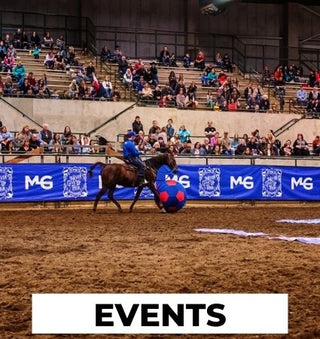
Several horses and riders may be moving at the same time. They may play tag, move a soccer ball, ride over tarps, pass beneath obstacles, carry flags, or have a pool noodle fight. Music may be playing, horses may change direction, and unexpected objects may enter a horse’s space.
The goal is not to frighten horses for entertainment.
The goal is to create manageable, unexpected situations in a controlled environment so the rider can find out whether the horse remains responsive.
When you train one horse by yourself, you usually know what is going to happen next. You control when the tarp moves, when the flag appears, and where the horse is going.
The Thunderdome changes that.
You may not see another horse coming up behind you. You may not know when a ball will roll in your direction. You may not know when someone is about to tag you with a pool noodle.
You and your horse must learn to respond together instead of relying on a perfectly predictable setup.
Why Predictable Practice Is Not Always Enough
Real life with horses does not always follow the lesson plan.
Many riding accidents do not happen while someone is getting on an unstarted horse.
They happen while people are riding horses that are already considered trained.
The horse may look to the side, stop suddenly, jump forward, spin, or turn toward another horse. That unexpected change of momentum can unseat the rider. Once the rider begins sliding or hanging off the horse, the situation can quickly escalate.
This does not necessarily mean the horse is bad or the rider has failed.
It means neither one was fully prepared for that particular moment.
Traditional practice often focuses on what to do when everything is going correctly. The Thunderdome creates opportunities to practice what to do when the horse becomes distracted, uncomfortable, or uncertain.
That is where things start to change.
Instead of discovering a weakness for the first time on the trail, you can identify and work through it inside a controlled environment.
Preparing for Unexpected Changes of Momentum
Your seat matters most when your horse does something you did not expect.
One of the biggest benefits of Thunderdome horse training is that it helps riders become more secure through unexpected movement.
As the horse stops, turns, pivots, backs, or changes direction, the rider learns to stay loose through the core instead of becoming stiff and tipping forward.
The rider should think about:
- Sitting deeply and securely
- Keeping the heels down and slightly forward
- Allowing the shoulders to stay behind the hips
- Looking up instead of staring at the obstacle
- Remaining loose enough to follow the horse’s movement
- Keeping a hand available to redirect the horse clearly
This position gives the rider a better chance of staying centered when the horse moves unexpectedly.
It also helps prevent the common reaction of grabbing with both hands.
When a rider grabs both reins out of fear, the horse may feel trapped and receive several unclear instructions at once. Learning to remain seated and redirect with one clear action can help the rider regain communication before the situation becomes bigger.
Practicing Communication During the Difficult Moment
The goal is not to avoid every uncomfortable moment. It is to know how to communicate through one.
Many horse owners practice when the horse is calm, focused, and successful.
Very few deliberately practice communicating during the moment when the horse becomes unsure.
Then, when that moment arrives unexpectedly, the rider may freeze, pull, panic, or forget what to do.
Inside the Thunderdome, the horse and rider repeatedly experience small moments of distraction and uncertainty.
The horse may notice another horse moving away. A ball may roll nearby. Someone may wave a noodle. The horse may speed up, slow down, or drift toward a friend.
The rider’s job is to stay consistent.
The horse should still be able to:
- Stop when asked
- Move forward when asked
- Turn in the requested direction
- Back up when asked
- Change speed without rushing
- Redirect attention to the rider
This teaches the horse that the rider’s communication still matters, even when the environment becomes exciting.
It also teaches the rider that they do not need to panic when the horse becomes uncomfortable. They can return to the same clear communication they use during quieter training.
More Than Traditional Horse Desensitization
The horse is not simply learning to tolerate an object.
Traditional horse desensitization training may focus on introducing one object at a time, such as a flag, tarp, plastic bag, or pool noodle.
That work has value, but the Thunderdome adds another layer.
The horse is not only being exposed to objects. The horse must remain responsive while the objects are moving, other horses are nearby, and the direction or speed of the activity may change without warning.
This matters because a horse can become comfortable with a tarp in a quiet arena and still struggle when a tarp moves during a busy group ride.
The Thunderdome helps connect obstacle confidence with responsiveness.
Your horse learns that even when something unusual happens, they can check in with you and wait for direction.
Why the Thunderdome Uses Games
Horse soccer, tag, and pool noodles are fun—but they also have a training purpose.
From the outside, the Thunderdome may look like riders are simply playing with their horses.
And in some ways, they are.
The horses may play soccer, follow or avoid another rider during tag, walk over tarps, move around feed bags, or pass beneath hanging obstacles. Riders and horses may walk, trot, canter, stop, turn, and change directions throughout the session.
These games introduce natural unpredictability.
A soccer ball does not always roll exactly where you expect. Another horse may move faster or slower. A rider may approach from an unusual angle. A pool noodle may appear in the horse’s blind spot.
Each activity gives the rider an opportunity to maintain clear communication while the horse processes what is happening.
It also keeps the session from becoming overly rigid.
Horses do not always need to focus on perfect head carriage or polished performance. Sometimes they benefit from moving, playing, and learning alongside other horses while still respecting the rider’s direction.
Helping Horses Become Comfortable Being Uncomfortable
Confidence develops when the horse learns how to find the answer.
The Thunderdome is not intended to make a horse feel completely relaxed every second.
Instead, it helps the horse learn what to do when they become uncomfortable.
When a horse wants to leave, speed up, follow another horse, or avoid an obstacle, the rider redirects the horse and returns to the task. When the horse gives the correct response, the rider releases the pressure.
Over time, the horse begins to understand that discomfort does not mean they need to panic or escape.
They can listen.
They can respond.
They can wait for direction.
This is what it means to help a horse become more comfortable being uncomfortable. The horse is not expected to ignore everything around them. They are learning how to process the situation without losing communication with the rider.
When an Obstacle Stops Being an Obstacle
An obstacle only has power while the horse believes it is something they cannot handle.
A tarp may feel like a major obstacle to a horse during the first session.
After the horse understands how to approach it, cross it, and remain responsive, the tarp may no longer create any visible discomfort.
At that point, endlessly repeating the same exercise may not accomplish much.
The rider can introduce something different.
For example:
- Begin with a flag.
- When the horse no longer hesitates, introduce a tarp.
- When the tarp becomes easy, add a soccer ball.
- Introduce a pool noodle or hanging obstacle.
- Add movement from other horses.
- Practice changes of speed and direction.
The specific object is not the main lesson.
The lesson is that the horse can encounter something unfamiliar, listen to the rider, and work through it successfully.
How This Work Can Help on the Trail
The habits built in the arena can support better decisions outside it.
Group trail rides introduce many of the same challenges found in the Thunderdome.
One horse may speed up. Another may fall behind. A horse may leave the group, call to a friend, or become concerned when another horse moves away.
Horses that have not practiced remaining responsive in these situations may become:
- Buddy sour
- Barn sour
- Anxious when another horse leaves
- Determined to lead the group
- Unwilling to be left behind
- Difficult to slow down or redirect
These behaviors are signs that the horse’s attention has shifted away from the rider.
Inside the Thunderdome, horses practice moving toward and away from one another while still listening to individual directions.
If one horse speeds up, the others do not automatically have to follow.
If one horse becomes reactive, the others can remain connected to their riders.
This can help prepare horses for group trail rides, parades, wagon trains, busy events, and other environments where movement and distractions are unavoidable.
It does not guarantee that a horse will never react. It gives the horse and rider more experience working together when something unexpected happens.
Benefits for Green, Young, and Problem Horses
Clear practice can help replace uncertainty with understanding.
Young horses, green horses, and horses with behavioral challenges often struggle because they do not know what response is expected when they feel pressure.
The Thunderdome gives them repeated opportunities to search for the correct answer.
They learn that rushing, following another horse, or avoiding the rider’s direction does not make the pressure disappear. Listening, redirecting, and responding correctly creates the release.
As horses gain experience, they may begin to look surprisingly comfortable in an environment that initially appeared overwhelming.
That comfort is built through practice.
They begin to expect that unusual things may happen—and that their rider will help them work through those moments.
How to Introduce Thunderdome Exercises Safely
Controlled chaos should still be controlled.
The full Thunderdome is an advanced group exercise. It should not be the first activity attempted with a horse that cannot yet stop, steer, back, or redirect reliably.
Before adding multiple horses and moving obstacles, make sure you have established basic communication.
A safer progression is to:
- Begin in a secure enclosure. Use a round pen or enclosed arena with safe footing and adequate space.
- Confirm your basic controls. Make sure you can ask your horse to move forward, stop, turn, back, and redirect.
- Introduce one object at a time. Start with a flag, tarp, ball, or pool noodle before combining several distractions.
- Practice changes of momentum. Ask for calm transitions, stops, turns, and changes of direction.
- Add one experienced horse and rider. Avoid beginning with a large group.
- Increase activity gradually. Add games and additional movement only when the horses and riders remain responsive.
- Use appropriate safety equipment. Riders should use properly fitted tack and protective equipment appropriate to their experience and discipline.
- Work with experienced guidance. Do not create a high-pressure group exercise when the riders cannot confidently redirect their horses.
The goal is not to see how much chaos a horse can survive.
The goal is to create enough manageable challenge for the horse and rider to improve without becoming overwhelmed.
The Real Goal of the Thunderdome
This is not about creating a horse that never notices anything.
Your horse is still a horse.
They may look at an unusual object. They may become concerned when something moves unexpectedly. They may need time to process a new environment.
The goal is not to remove every natural reaction.
The goal is to build a horse that can notice something, stay connected to you, and respond to clear direction.
At the same time, the Thunderdome helps you become a more capable rider.
You learn to sit through unexpected movement, remain calm, and communicate during the exact moment when your horse needs your direction most.
That is how confidence is built.
Not by waiting until you are certain nothing will go wrong—but by developing the skills to respond when something does.
Frequently Asked Questions About Thunderdome Horse Training
Is the Thunderdome the same as horse desensitization training?
Not exactly. Desensitization is part of the process, but the Thunderdome also focuses on responsiveness, rider position, redirection, group movement, and unexpected changes of momentum.
Can a green horse participate in the Thunderdome?
A green horse can eventually benefit from this work, but the horse should first understand basic steering, stopping, backing, and redirection. Begin with one stimulus in a controlled setting before adding a group environment.
What objects are used during Thunderdome training?
Common objects and activities include tarps, flags, feed bags, soccer balls, pool noodles, hanging obstacles, music, horse soccer, and tag. Objects should be free from sharp edges, loose loops, or anything that could trap a horse or rider.
Can I try the Thunderdome at home?
You can introduce individual Thunderdome concepts at home, but start small. Use a secure environment, confirm that you can redirect your horse, and introduce only one new challenge at a time. The full group exercise should be practiced with capable riders and appropriate supervision.
Build Confidence Before You Need It
The arena is the place to prepare for the trail.
Do not wait until your horse spooks beside a drop-off, rushes after another horse, or spins on a busy trail to find out whether you can communicate through the moment.
Create safe, manageable opportunities to practice first.
Start with one obstacle.
Practice your stops, turns, and redirection.
Pay attention to your seat.
Then gradually introduce more movement and unpredictability as you and your horse become ready.
It may look a little unusual.
It may even look like a lot of shenanigans.
But when it is done with purpose, the Thunderdome can help you and your horse build the clarity, responsiveness, and confidence needed for a safer, more successful partnership.
The goal is not perfection.
The goal is knowing that when something unexpected happens, you and your horse have a clear path forward.